When a “Young Man’s Cancer” Meets Real-World Barriers, Gavers Steps In
Connor O’Leary didn’t plan on spending his adult life talking about cancer.
He was 19—living in Europe as a professional cyclist—when his body started sending signals that didn’t make sense. Back pain. Fatigue. A growing sense that something was off. He flew home, went in for what he thought would be a routine physical, and walked out with words that rerouted his life: It’s likely cancer.
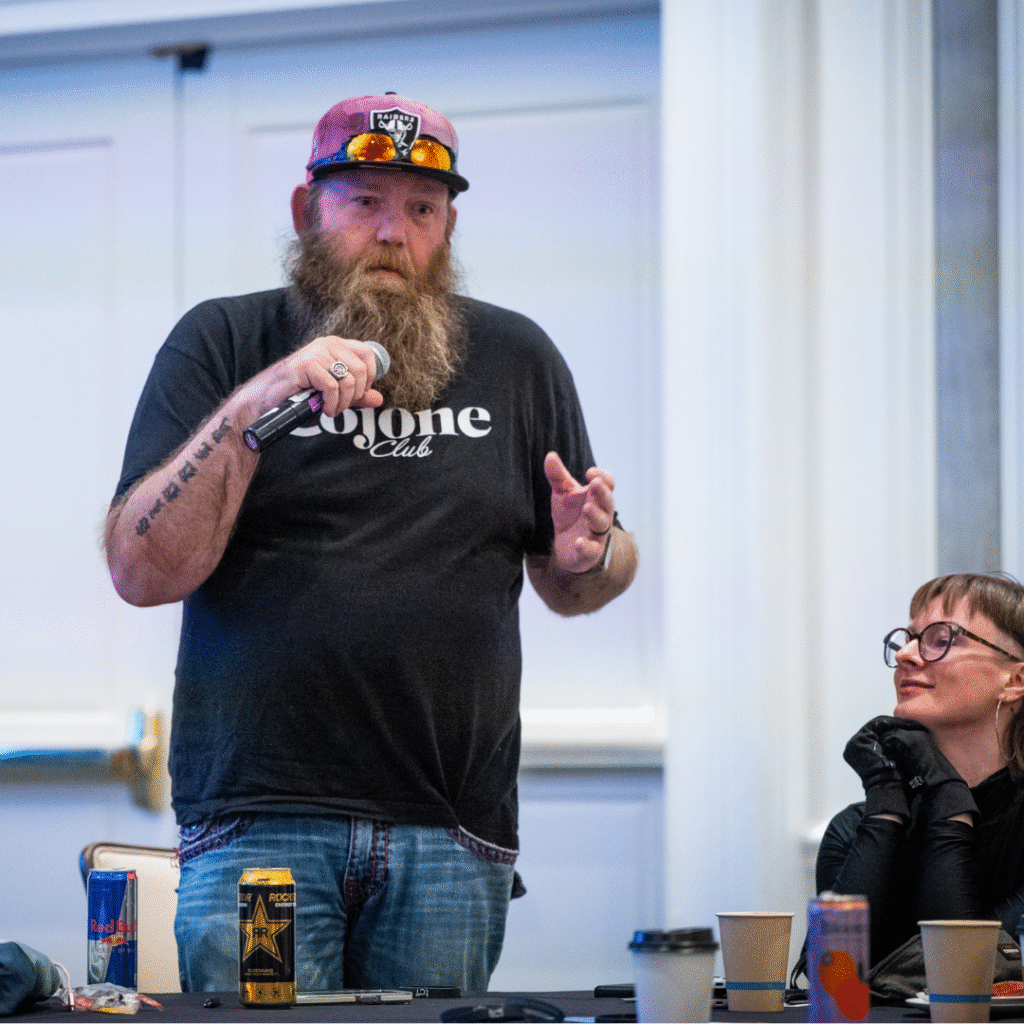
“It was such a shock—so unexpected,” O’Leary said. “I didn’t even know I was susceptible.” And that’s a problem with a lot of guys who get this diagnosis. They don’t even know they can get it.
Today, O’Leary serves as chief mission officer at Testicular Cancer Foundation. It’s a job where everything he does is driven by one instinct: help the person in front of you take the next right step.
“When someone reaches out, I’m the first point of contact to make sure they get the care they need,” he said. “That mission bleeds into every aspect of what we do.”
A Cancer That’s Beatable—If You Catch It in Time
Testicular cancer is the most common malignancy in men ages 15 to 34. And when it’s found early, outcomes are overwhelmingly positive: the American Cancer Society reports a 99% five-year relative survival rate for this kind of localized disease.
That’s the good news. The hard news is that “beatable” doesn’t always mean “easy.” Even when someone does notice something wrong, the next step can feel loaded—embarrassment, fear, denial, and that familiar temptation to wait it out.
“A lot of these guys have fear and stigma—like it might emasculate them,” said O’Leary. “We’re working to break down that stigma so they get checked early.”
What the Testicular Cancer Foundation Does—and Why It Works
TCF’s mission is built on three pillars: education, awareness, and support.
In practice, that means meeting men where they are—online, in the swirl of anxiety after a symptom appears, and in the lonely days after diagnosis when questions multiply faster than answers.
“The internet is a scary place,” O’Leary said. “When you feel like something’s wrong, you can go down the Google rabbit hole, where people are putting out misinformation or the worst case scenario. We make sure we’re a real-time resource so men can find reliable information and connect with people who understand what they’re going through.”
That’s why TCF created tools like TCF Navigator, a free support resource designed to help patients, survivors, and caregivers navigate what comes next.
But there’s another layer of support that can’t be replicated through a screen. It’s the kind of magic that happens when someone looks you in the eye and says: I’ve been there.
The Summit: Where “I’ve Been There” Becomes a Lifeline
Each year, TCF hosts a signature gathering for survivors and caregivers. It’s a weekend built around community, education, advocacy, and the lived realities of survivorship.
“This is a weekend of community, advocacy, and support,” said O’Leary. “A lot of these guys have never met another patient face-to-face. It’s important to understand there are other men who get it—and that support extends beyond treatment.”
The TCF Summit 2026 is scheduled for April 10–12, 2026 in Las Vegas. And the weekend is intentionally practical. Survivors don’t just swap stories—they gain tools for real life after cancer.
“We’ll have medical professionals. We’ll have a trauma specialist who will help guys learn how to face trauma and the PTSD associated with this diagnosis,” O’Leary said.
“We’ll have a hormonal health doctor to talk about replacement therapy and what to ask providers. And we’ll address how testicular cancer impacts relationships and intimacy. These are the issues guys are facing every day.”
It’s a powerful model: specialists + survivor wisdom + belonging. But there’s a problem—especially for a cancer that hits men early in adulthood.
The Barrier of Getting There
Testicular cancer is often diagnosed when men are still in school, just starting careers, or carrying early financial responsibilities. Travel, lodging, and time away can turn a life-changing opportunity into something that feels impossible.
That’s where Gavers dollars are quietly changing outcomes—one scholarship, one plane ticket, one conversation, one survivor at a time.
“A lot of our growth can be attributed to travel scholarships,” O’Leary said. “Gavers dollars are what enables our attendees to make it to the event. And it changes lives.”
The Practical Role Gavers Plays—One with Lasting Impact
O’Leary first met Steve Gavers back in 2016, when Steve attended a TCF event in Austin, Texas. A friendship formed, and the relationship quickly grew into a partnership that changes lives. “Our organizations partnered, and we’ve been blessed beneficiaries of the good work they do and the money they raise,” he said
The partnership is primarily financial—but it’s not generic funding. “The money we get from Gavers is earmarked to enable men and caregivers who want to attend to get there.” The ripple effects have been profound.
“When Steve came to our first event, we had 15 or 16 guys,” O’Leary said. “Now we’re at the point where we’re bringing in 85 to 100 survivors and caregivers. It’s still manageable—still feels like family and community—but we’ve been able to grow and expand our reach.”
That growth isn’t just a bigger headcount. It’s more men who get connected, stay connected, and carry what they learn back into their relationships, their workplaces, their doctor’s offices—and into the lives of the next guy who’s scared to speak up.
What Would Happen Without This Partnership?
O’Leary doesn’t romanticize the answer.
“A lot of the guys we serve wouldn’t be able to get to the summit without those scholarships,” he said. “This is what allows us to grow the event and expand our reach.”
And in survivorship, “reach” matters. Because cancer doesn’t end when treatment ends. For many, that’s when the mental and emotional weight shows up most intensely—when the casseroles stop coming, when the scans become routine, when fear gets quieter but never fully disappears.
The Summit becomes a hinge point. Before, you felt alone. After, you know you’re not.
This Is Exactly What Gavers Exists To Do
Gavers Community Cancer Foundation has always been about turning local generosity into tangible cancer support—support that reaches people when they’re scared, overwhelmed, and in need of something real.
In this case, Gavers dollars become something beautifully specific:
- A scholarship that turns “I can’t afford it” into “I’ll be there”
- A weekend that turns isolation into community
- A survivor who turns around and helps the next one
“I want to express how much appreciation we have for what Gavers does,” O’Leary said. “Partnering with like-minded organizations is how we move the needle—how we address these issues. We’re so grateful that we get to rub shoulders with them.”
When Every Penny Counts and Every Effort Matters
Because of Gavers supporters, survivors of testicular cancer are finding their way to credible information, life-giving community, and long-term support—often at the exact moment they need it most.
When you give to Gavers, you don’t always see where your gift goes. But sometimes, it looks like this:
- A young man gets on a plane.
- He walks into a room full of people who understand.
- And for the first time since diagnosis, he exhales.
All because of someone like you.