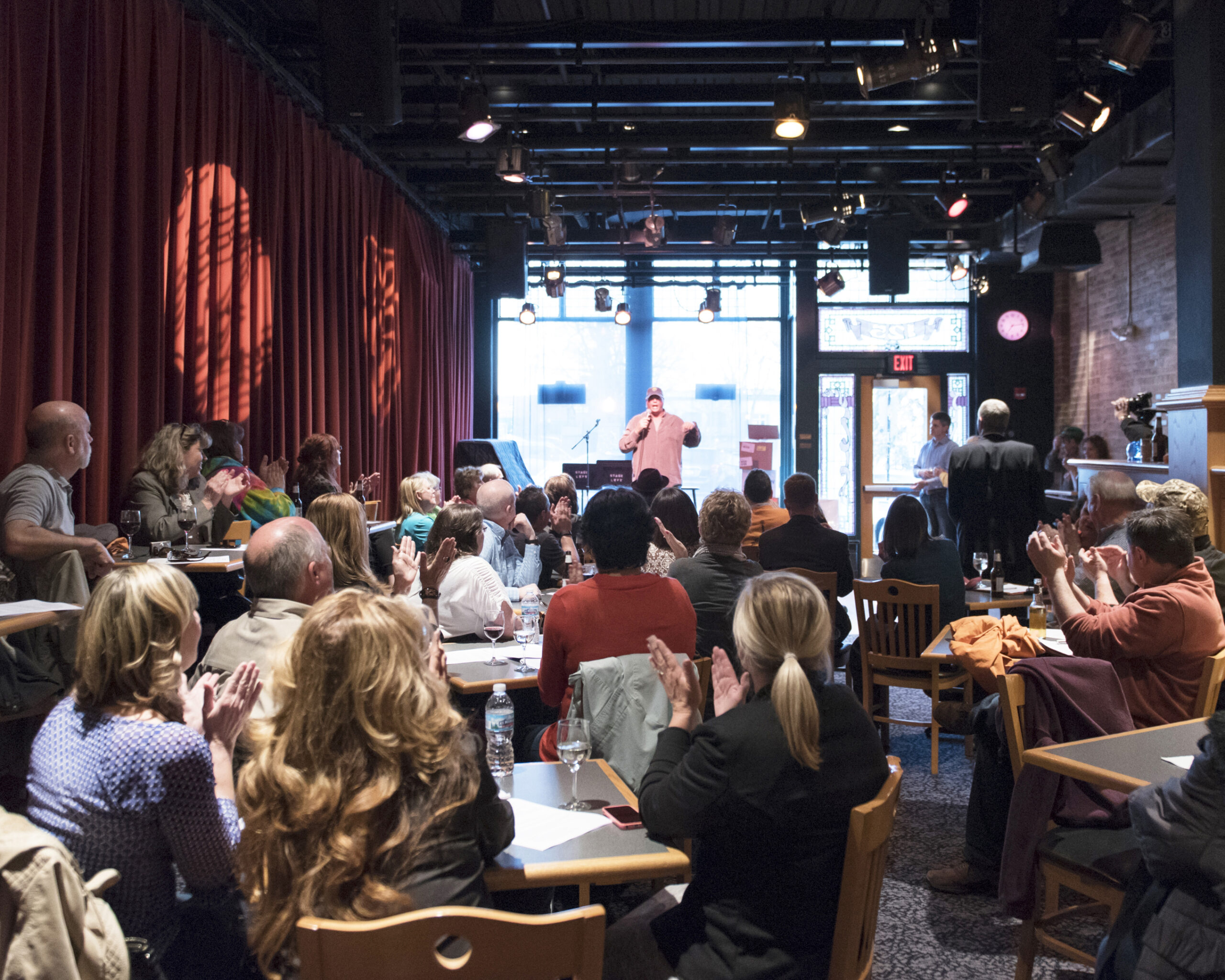
One of Steve Gavers’ Best-Kept Secrets

A lot of people know Steve Gavers as the founder of Gavers Community Cancer Foundation. They know he cares deeply about people facing cancer. They know the organization shows up with help, compassion, and support when people need it most.

The Calls No One Sees

What most people don’t know is this: Steve has personally taken hundreds of calls from people facing cancer diagnoses. Not because it’s his job. Not because he gets paid. Not because he wants attention for it. He does it because he knows exactly how terrifying that call feels on the other end.

For years, this has been one of Steve’s best-kept secrets. Until now.

Steve doesn’t stand in big rooms and talk about it. He doesn’t make a show of it. He simply answers when people call. And call they do…on his personal cell phone.

More Than a Slogan

In fact, Gavers Community Cancer Foundation is the kind of organization that lists its board members’ cell phone or work numbers right on its website.

Think about that for a moment.

What other organization says it supports people with cancer and then makes real people directly available to someone in crisis? What other founder works all day at a gravel pit and then takes deeply personal calls at night from people trying to process a life-altering diagnosis?

That’s not branding. It’s not a catchy phrase. It’s not something cute to splash on social media.

When Gavers says they are all about supporting people with cancer, that isn’t just a marketing slogan. It’s people pouring their hearts and souls into helping others with cancer, providing the kind of support that helps them navigate the crisis with dignity and grace.

Help from Someone Who Gets It

You see, Steve isn’t just a founder. He’s also a cancer survivor.

Cancer was a horrible experience for Steve. He knows firsthand the fear, the disruption, the uncertainty, and the loneliness that can come with a diagnosis. That’s why he keeps answering the phone.

Sometimes people need guidance. Sometimes they need reassurance. Sometimes they just need to hear the voice of someone who has been there.

Over the years, Steve has quietly become a personal counselor to hundreds and hundreds of survivors and families, although he would probably never describe himself that way. He would just say he wants to help people.

The Heart Behind the Mission

That spirit is at the core of Gavers Community Cancer Foundation. This mission has never been about empty words. It’s always been about real people showing up for others, the ones experiencing the hardest moments of their lives.

So today, we’re taking the time to tell you what Steve never would.

We want you to know just how much heart he pours into this mission. Behind the name, behind the outreach, behind the support, there is a man who quietly keeps picking up the phone, one call at a time.

If that doesn’t prove that Gavers Community Cancer Foundation isn’t distant, automated, or filtered through layers of red tape, nothing will. Because at Gavers, support is personal. It’s sacrificial. It’s real.

And sometimes, it sounds like Steve Gavers answering his cell phone and saying, “How can I help?”

The Barndance: Where a Fun Night Out Becomes a Lifeline for Local Families

It was never supposed to be this big.

The original idea behind the Gavers Community Cancer Foundation Barndance was simple. Pull people together, have a good time, and maybe raise a little money to help families facing cancer.

It was inspired by an older way of life, a time when the community would clear the hay out of the barn, grab some local musicians, and throw a dance. Nothing fancy. Nothing overproduced. Just people, music, and community. And it was all heart.

But from the beginning, the Barndance had bigger plans.

From Barn Floor to Big Stage

What started as a straightforward fundraiser quickly transformed into something electric.

Steve Gavers, along with early supporters Glenn Crandall and Hans Mast, set out to create a party with purpose — a night that could take something painful and turn it into something alive, generous, and unforgettable.

Truth be told, they really didn’t know exactly what they were doing. They just knew they wanted to build something that felt real, hopeful, and full of life.

And then the community showed up in a way nobody saw coming.

The Night That Everything Changed

The first-year goal was modest. If they raised $10,000, Steve thought that would be a jackpot. Instead, the event blew past every expectation, becoming overcrowded weeks before it even happened and raising $125,000 in its very first year.

That kind of response doesn’t happen by accident. It happens when an idea catches fire, when a community sees something authentic and decides, all at once, that it belongs to them too.

That is the magic of the Barndance.

More Than a Party

Make no mistake. This event isn’t sophisticated in a sterile, buttoned-up way. It’s bold, warm, and joyful—the kind of event that refuses to let cancer have the final word. Beneath the lights, the music, and the laughter, the energy that comes from the buzz of a packed crowd, is something deeper: a fierce determination to turn hardship into hope.

And Steve would be the first to tell you that none of it was built alone.

A Moment Built by a Community That Cares

The Barndance came together because people brought their piece of the puzzle. One friend had a bar. Another had a band. Another could print the posters. A banker helped set up an account and a PO box so Steve never had to touch the money.

A lawyer helped establish the nonprofit. Board members, volunteers, business leaders, and everyday supporters stepped in and made the thing real.

What emerged was more than an event. It was a full-scale community creation.

Bigger Every Year

Over the years, the Barndance has continued evolving. It’s definitely grown more polished, more intentional, and more tightly managed, but it’s never lost its spark. Tickets are limited. The experience stays fresh. Every year adds a new chapter. Every year becomes a milestone.

And every year, the event shines a spotlight not only on fundraising, but on the people at the center of the mission — especially the Never Be Defeated honorees, whose selflessness and courage continue to define what this night is really about.

The Real Power Behind the Music

If there’s one thing Steve is clear about, it’s this: the Barndance has always been about more than money.

Yes, the dollars matter. Yes, the impact matters. But the real power of the Barndance is what it makes possible: hope, direction, encouragement. Joy in the middle of grief. A reason for people to keep going. And a reminder that even in the shadow of cancer, there can still be light, laughter, and a room full of people ready to stand with you.

The Showman Spirit

And then there’s Steve himself — part founder, part ringmaster, part hometown showman.

When Barndance night arrives, he doesn’t disappear into the background. He comes alive. He wants people to feel welcomed, celebrated, and glad they came.

In his own words, Steve feels like “the dancing rooster on a hot tin roof,” determined to make every person in the room feel special enough to come back next year. That image says everything you need to know about the spirit of the Barndance. It’s not just an event you attend. It’s a moment you feel.

A Night That Became a Legacy

And that’s precisely why the Barndance endures. What began as a barn-dance-inspired fundraiser became a phenomenon. What began as one man’s response to cancer became a rallying point for an entire community. What began with a tent and a big idea became one of the most powerful expressions of hope, grit, and generosity the region has ever seen.

Steve Gavers Never Asked for This Fight—But He Turned It into Something Far More Powerful than Himself

What do you do with a shattering cancer diagnosis? One that strikes hard, hits fast, and changes everything?

Most people turn inward, hunker down, and get ready for a long and lonely fight. But Steve Gavers isn’t most people, and the cancer foundation that launched in his name is hardly typical. In fact, it’s anything but.

A Story That Starts Like Many Others

Cancer was never some distant cause or abstract issue for Steve. One day, life was moving full speed ahead. He was young, strong, active, and in the prime of his life. The next, he was facing a diagnosis of testicular cancer and the kind of news that brings everything to a screeching halt.

Suddenly, nothing felt certain. Surgery came fast. Recovery took time. And the battle was about more than the physical toll. Like so many survivors, Steve was forced to confront the fear, frustration, and emotional whiplash that can follow a life-altering diagnosis.

Steve learned quickly that treatment is only part of the story. What comes after can be just as overwhelming. Where do you turn when the appointments slow down but the questions keep coming? How do you process the emotional fallout? Who helps you navigate the uncertainty?

It’s a story that rings true for literally every person who survives cancer. But that’s where the similarities end.

When Frustration Became Fuel

For Steve, having to navigate the aftermath of cancer on his own was maddening. But that anger didn’t harden him. It sparked a fire.

Instead of letting frustration win, Steve turned it into purpose. If the road through cancer felt confusing and lonely for him, he wanted a chance to make it far different for someone else. That determination became the trigger for what is now Gavers Community Cancer Foundation.

The Barndance That Started a Movement

Unlike most foundations and fundraisers, the idea for the Barndance didn’t begin in a boardroom. It was far more personal—a conversation with Steve’s grandfather.

What if they hosted a simple barn dance? Something rooted in the heritage of the local community. A chance to gather people, have some fun, raise a little money, and maybe help a few families along the way.

Simple enough.

Except the community had bigger plans.

What started as one grassroots event took off with a force no one expected. The Barndance struck a chord almost instantly, growing beyond its original vision and becoming the kind of event people rallied around with open hearts and open hands.

That early momentum helped define what Gavers Community Cancer Foundation would become: deeply local, fiercely compassionate, and powered by people who show up.

Built by a Community That Cares

Ask Steve about the foundation’s growth, and he won’t make it about himself. He talks about the people who stepped in early. The volunteers. The board members. The donors. The community leaders. The families and supporters who believed in the mission strongly enough to keep showing up year after year.

He talks about the survivors, the families in the fight, and the Never Be Defeated honorees whose courage puts everything in perspective. That’s what fuels the foundation. Not spotlight. Not applause. People.

More Than a Fundraiser

Yes, the dollars matter. The support matters. The impact matters. But Gavers Community Cancer Foundation has never been about just raising money. It’s about standing in the gap for people facing one of life’s hardest battles. It’s about helping patients and families find direction when everything feels upside down. It’s about easing fear, restoring dignity, and offering hope when it is needed most.

At its core, the mission is simple and powerful: make a difference through cancer awareness, education, treatment, and research, and do it with compassion. Through the growing success of GCCF, that mission has never changed.

What Success Really Looks Like

For Steve, the work is still deeply personal. He continues to urge people to get checked, pay attention, and not ignore what could save their lives. And when you ask him what success looks like, the answer isn’t flashy.

It looks like one person getting the help they need. One family finding encouragement. One survivor feeling seen. One moment of hope breaking through the fear. Only, thanks to GCCF, it’s not just one person. It’s thousands.

Steve Gavers may have helped start this story, but he knows he didn’t build this movement alone. Friends, volunteers, board members, business leaders, and generous supporters turned one man’s painful experience into something much bigger than anyone imagined.

Diagnosis became mission. Frustration became fuel. What began as a single story became a powerful force for good, and thousands of people’s lives have changed as a result.

Cancer Doesn’t End When Treatment Stops

For many people, finishing cancer treatment is supposed to feel like the end of the battle. The surgeries are over. The chemo is done. The appointments start to slow down. From the outside, it can look as if life is finally going to return to normal.

But for many survivors, that isn’t what happens at all.

The physical crisis may pass, but the emotional and mental effects linger. Fear doesn’t always disappear. Neither does sadness. Neither does the sense that something inside you has changed.

That’s why Gavers Community Cancer Foundation has spent years talking about something too few people discuss: the PTSD effects of cancer diagnosis and treatment.

A Trauma We Don’t Talk About Enough

For too long, PTSD has been misunderstood. Many people hear the term and think only of military combat. But PTSD stands for post-traumatic stress disorder. At its core, it’s connected to trauma. And cancer is, without question, traumatic.

A cancer diagnosis can turn a person’s world upside down in a single moment. It can bring fear, uncertainty, invasive treatments, repeated surgeries, physical pain, financial stress, and the exhausting emotional weight of never knowing what comes next.

As founder Steve Gavers has said for years, no one talks enough about how PTSD relates to cancer. But if a person has gone through a traumatic situation, the effects are real, whether other people recognize them or not. The question isn’t always whether it exists. The question is how deeply it affects each individual person.

The Effect Is Different for Everyone

Not everyone experiences the aftermath of cancer in the same way. Some people may carry a smaller percentage of fear, anxiety, or emotional disruption and find ways to keep moving forward. Others may struggle with a much heavier burden — one that affects their sleep, their relationships, their decision-making, and their sense of hope.

As Steve explains it, “It’s all about the percentage that you have that you can control.”

That’s an important insight.

Some survivors are able to manage the emotional residue of cancer without letting it define them. Others may feel trapped by it. Both experiences are real. Both deserve compassion. And both remind us that survivorship is not just a medical issue. It’s a mental and emotional one, too.

Why This Matters So Much

When people don’t understand the connection between cancer and trauma, they can miss the warning signs in themselves or others. A survivor may look fine on the outside while quietly battling fear, emptiness, sadness, or emotional exhaustion. They may feel pressure to “move on” because treatment is over. They may believe they should be grateful just to be alive.

Unfortunately, they may not have words for what they are feeling.

That silence can be dangerous.

At Gavers Community Cancer Foundation, the goal isn’t just to respond when someone is already in crisis. The goal is to find people before things spiral out of control. To hear what is lying underneath the surface. To recognize when someone needs direction, support, encouragement, or simply someone who understands.

That kind of intervention matters.

Hope Is Part of Healing

Steve Gavers has spent two decades talking about this issue because he has lived it. He knows that surviving cancer is not always the same thing as healing from it.

He also knows something else: hope matters.

“If we can give any direction to cancer survivors,” Steve says, “maybe it’s hope.”

That may sound simple, but it’s no small thing. In fact, it may be one of the most important forms of support a person can receive. When someone is carrying the hidden effects of trauma, hope can be the first step back toward stability. A single conversation can remind them that what they are feeling is real — and that they aren’t weak for feeling it.

That’s why the work of Gavers Community Cancer Foundation matters so deeply. Without it, Steve says, “there would be more sadness and emptiness  in the world.”

The Happy Stories Keep Us Going

This work is heavy, but it’s also deeply meaningful. Joy comes when Steve and the board hear the happy stories. The stories of people who found support. The stories of people who were seen, heard, encouraged, and helped through one of the hardest seasons of their lives.

Those are the stories that keep us going.

Because behind every conversation about trauma, PTSD, and mental health is a bigger mission: helping people make it through with dignity, grace, and hope.

And that may be the most important thought of all.

Cancer care cannot stop at the body. It has to make room for the mind, the heart, and the invisible wounds people carry long after treatment ends.

That understanding isn’t extra. It’s essential.

If you believe no one should face the emotional aftermath of cancer alone, support Gavers Community Cancer Foundation. Your gift helps bring compassion, direction, and hope to people navigating one of life’s hardest battles.

When a “Young Man’s Cancer” Meets Real-World Barriers, Gavers Community Cancer Foundation Steps In

Connor O’Leary didn’t plan on spending his adult life talking about cancer.

He was 19—living in Europe as a professional cyclist—when his body started sending signals that didn’t make sense. Back pain. Fatigue. A growing sense that something was off. He flew home, went in for what he thought would be a routine physical, and walked out with words that rerouted his life: It’s likely cancer.

“It was such a shock—so unexpected,” O’Leary said. “I didn’t even know I was susceptible.” And that’s a problem with a lot of guys who get this diagnosis. They don’t even know they can get it.

Today, O’Leary serves as chief mission officer at Testicular Cancer Foundation. It’s a job where everything he does is driven by one instinct: help the person in front of you take the next right step.

“When someone reaches out, I’m the first point of contact to make sure they get the care they need,” he said. “That mission bleeds into every aspect of what we do.”

A Cancer That’s Beatable—If You Catch It in Time

Testicular cancer is the most common malignancy in men ages 15 to 34. And when it’s found early, outcomes are overwhelmingly positive: the American Cancer Society reports a 99% five-year relative survival rate for this kind of localized disease. 

That’s the good news. The hard news is that “beatable” doesn’t always mean “easy.” Even when someone does notice something wrong, the next step can feel loaded—embarrassment, fear, denial, and that familiar temptation to wait it out.

“A lot of these guys have fear and stigma—like it might emasculate them,” said O’Leary. “We’re working to break down that stigma so they get checked early.”

What the Testicular Cancer Foundation Does—and Why It Works

TCF’s mission is built on three pillars: education, awareness, and support.

In practice, that means meeting men where they are—online, in the swirl of anxiety after a symptom appears, and in the lonely days after diagnosis when questions multiply faster than answers.

“The internet is a scary place,” O’Leary said. “When you feel like something’s wrong, you can go down the Google rabbit hole, where people are putting out misinformation or the worst case scenario. We make sure we’re a real-time resource so men can find reliable information and connect with people who understand what they’re going through.”

That’s why TCF created tools like TCF Navigator, a free support resource designed to help patients, survivors, and caregivers navigate what comes next. 

But there’s another layer of support that can’t be replicated through a screen. It’s the kind of magic that happens when someone looks you in the eye and says: I’ve been there.

The Summit: Where “I’ve Been There” Becomes a Lifeline

Each year, TCF hosts a signature gathering for survivors and caregivers. It’s a weekend built around community, education, advocacy, and the lived realities of survivorship.

“This is a weekend of community, advocacy, and support,” said O’Leary. “A lot of these guys have never met another patient face-to-face. It’s important to understand there are other men who get it—and that support extends beyond treatment.”

The TCF Summit 2026 is scheduled for April 10–12, 2026 in Las Vegas. And the weekend is intentionally practical. Survivors don’t just swap stories—they gain tools for real life after cancer.

“We’ll have medical professionals. We’ll have a trauma specialist who will help guys learn how to face trauma and the PTSD associated with this diagnosis,” O’Leary said.

“We’ll have a hormonal health doctor to talk about replacement therapy and what to ask providers. And we’ll address how testicular cancer impacts relationships and intimacy. These are the issues guys are facing every day.”

It’s a powerful model: specialists + survivor wisdom + belonging. But there’s a problem—especially for a cancer that hits men early in adulthood.

The Barrier of Getting There

Testicular cancer is often diagnosed when men are still in school, just starting careers, or carrying early financial responsibilities. Travel, lodging, and time away can turn a life-changing opportunity into something that feels impossible.

That’s where Gavers Community Cancer Foundation dollars are quietly changing outcomes—one scholarship, one plane ticket, one conversation, one survivor at a time.

“A lot of our growth can be attributed to travel scholarships,” O’Leary said. “Gavers dollars are what enables our attendees to make it to the event. And it changes lives.”

The Practical Role Gavers Community Cancer Foundation Plays—One with Lasting Impact

O’Leary first met Steve Gavers back in 2016, when Steve attended a TCF event in Austin, Texas. A friendship formed, and the relationship quickly grew into a partnership that changes lives. “Our organizations partnered, and we’ve been blessed beneficiaries of the good work they do and the money they raise,” he said

The partnership is primarily financial—but it’s not generic funding. “The money we get from Gavers Community Cancer Foundation is earmarked to enable men and caregivers who want to attend to get there.” The ripple effects have been profound.

“When Steve came to our first event, we had 15 or 16 guys,” O’Leary said. “Now we’re at the point where we’re bringing in 85 to 100 survivors and caregivers. It’s still manageable—still feels like family and community—but we’ve been able to grow and expand our reach.”

That growth isn’t just a bigger headcount. It’s more men who get connected, stay connected, and carry what they learn back into their relationships, their workplaces, their doctor’s offices—and into the lives of the next guy who’s scared to speak up.

What Would Happen Without This Partnership?

O’Leary doesn’t romanticize the answer.

“A lot of the guys we serve wouldn’t be able to get to the summit without those scholarships,” he said. “This is what allows us to grow the event and expand our reach.”

And in survivorship, “reach” matters. Because cancer doesn’t end when treatment ends. For many, that’s when the mental and emotional weight shows up most intensely—when the casseroles stop coming, when the scans become routine, when fear gets quieter but never fully disappears.

The Summit becomes a hinge point. Before, you felt alone. After, you know you’re not.

This Is Exactly What Gavers Exists To Do

Gavers has always been about turning local generosity into tangible cancer support—support that reaches people when they’re scared, overwhelmed, and in need of something real.

In this case, Gavers dollars become something beautifully specific:

  • A scholarship that turns “I can’t afford it” into “I’ll be there”
  • A weekend that turns isolation into community
  • A survivor who turns around and helps the next one

“I want to express how much appreciation we have for what Gavers does,” O’Leary said. “Partnering with like-minded organizations is how we move the needle—how we address these issues. We’re so grateful that we get to rub shoulders with them.”

When Every Penny Counts and Every Effort Matters

Because of Gavers supporters, survivors of testicular cancer are finding their way to credible information, life-giving community, and long-term support—often at the exact moment they need it most.

When you give to Gavers, you don’t always see where your gift goes. But sometimes, it looks like this:

  • A young man gets on a plane.
  • He walks into a room full of people who understand.
  • And for the first time since diagnosis, he exhales.

All because of someone like you.

From Too Late to In Time: How Gavers Helps Patients Get Screened Before Emergency Strikes

Imagine you finally work up the courage to see a doctor—after months, maybe years, of putting it off, only to hear these words: We’re concerned. You need this test. And then comes the cost: $800.

For most people, the potential diagnosis is scary enough. For someone lacking insurance and already choosing between rent, groceries, and gas to get to work, that statement can signal the end of the road.

Yet that’s the reality Family Health Partnership Clinic (FHPC) confronts every day in McHenry County, Illinois—and why the partnership with Gavers Community Cancer Foundation has become such a powerful lifeline.

“We serve people in the county who don’t have any health insurance—and no public aid. These are people with literally no other options,” said Suzanne Hoban, executive director of Family Health Partnership Clinic.

We see about 1,700 individuals each year and log roughly 7,000 patient visits. Obviously, these aren’t just a once-a-year checkups. People come to us with real, ongoing needs.”

As the clinic marks its 30-year anniversary, that mission has never been more essential—or more strained. Demand is rising, barriers are multiplying, and the cost of late-stage illness is devastating.

And yet, because of Gavers, hundreds of patients have seen their cancer journeys change in tangible, life-saving ways.

When Delayed Care Becomes a Crisis

Many of the clinic’s patients arrive after postponing care for years. Not because they don’t care—but because they can’t risk the consequences of seeking help in a system that often feels unreachable.

“A lot of people coming in have put off care for so long,” Hoban said. “Something that could have been treated earlier is much more significant now. Our patients’ needs are complex, and yes, the diagnosis can include cancer. Sometimes too late to initiate treatment.”

It’s a sobering statement—and one that carries the weight of what happens when early detection is replaced by waiting and hoping symptoms disappear.

Illnesses don’t go away on their own,” Hoban said. “They need medication and treatment. Without it, people can become extremely sick—and then they end up in the emergency room, where treatment options become invasive, or simply out of reach.”

The Cancer Gap: What Gavers Makes Possible

The most pivotal impact of Gavers Community Cancer Foundation is simple and profound: it helps the clinic catch cancer sooner—when treatment is more effective, less invasive, and far more likely to save a life. In other words, thanks to Gavers, the clinic can back up the “Get checked” message with real and tangible assistance.

“Gavers has been a wonderful partner with us,” Hoban said. “Our local community raising money for a local organization—it’s so powerful. Their support has allowed us to expand screenings and treatments.”

Take colon cancer screening. “We would not be able to screen for colon cancer without Gavers,” Hoban said. “Those tests are expensive. The Gavers dollars allow us to provide that screening. And if a patient has a positive result and needs a colonoscopy, Gavers helps pay for that as well.” In fact, in the past 25 years, Gavers has supported the clinic’s efforts with more than $600,000!

The support couldn’t be more timely. Rates of colorectal cancer have been rising nationally, including among younger adults. For patients without coverage, the cost barrier alone can be fatal.

It’s the same with skin cancer, another diagnosis where early action matters. “We can do primary care screenings,” Hoban said, “but if someone needs a biopsy sent to a pathologist, Gavers allows us to pay for those pathologies. That means we can find the cancer and provide treatment early.”

Hoban doesn’t mince words about what that funding changes.

“It’s not an overstatement to say it can be the difference between life and death,” she said. “If these cancers are caught early enough, they can be treated—and that person can have a perfectly healthy rest of their life. If it’s left too long… the outcome can be very different.”

More Than Tests: A Guide Through the System

Cancer isn’t just a diagnosis. It’s a maze—appointments, referrals, specialists, side effects, transportation, paperwork, fear. For patients with resources, it’s overwhelming. For patients already living with instability, it can prove impossible.

“If you’re well insured, middle class, and well educated, cancer treatment can still mean navigating three different physicians, multiple treatments, and side effects,” Hoban said. “For our patient population—those with lower education levels, language barriers, and a lack of understanding about how the system works—it’s even harder.”

That’s why the Gavers impact isn’t just financial.

“Gavers dollars help pay the nurses who walk patients through treatment,” Hoban said. “Our patient navigators help people take the next step when cancer care can feel out of reach.”

The Pressure Is Rising—and the Need Is Growing

Even with strong partnerships, the clinic is stretched. “We’re turning away about five people every day,” Hoban said. “We simply don’t have the capacity yet to serve everyone who needs us.”

A shifting insurance landscape is also pushing more working families into crisis. “The cost of insurance skyrocketing,” Hoban said. “We’re hearing from people whose insurance is going from $300 a month to $1,100 a month. That’s not sustainable. We’re getting calls from people who never thought they would need our services.”

What Would Happen Without Gavers?

Hoban is candid about the alternative. “Without Gavers, we would have to tell patients, You need this test. We recommend you get checked, but we can’t schedule it, can’t pay for it, can’t walk you through treatment.

Thankfully, because of Gavers, the opposite is true, and the trajectory for hundreds of people’s lives have changed as a result.

Here’s the reality. Cancer doesn’t wait for someone to get better insurance. It doesn’t wait for a family’s finances to stabilize. And it doesn’t care how hard someone works.

Gavers Community Cancer Foundation steps into that gap, and Family Health Partnership Clinic turns that support into screenings, biopsies, colonoscopies, navigation, and care that meets people in their moment of greatest need.

Thanks to Gavers, local dollars are changing local outcomes—right now.

And for the next person who walks through the clinic doors, frightened by a symptom they’ve ignored too long, that partnership means hearing words that change everything:

We found it early. Let’s get you the help you need.

BARNDANCE 2025

Date: Saturday, July 19
Time: 5 p.m. – Midnight
Location: Emricson Park

Mark your calendars for BARNDANCE 2025!

For our 25th anniversary, we are going all out! Great food, live music and coming together for a great cause. Buy your tickets now and get ready to have the best 7 hours of summer!

Every penny counts and every effort matters, help us make a difference.